
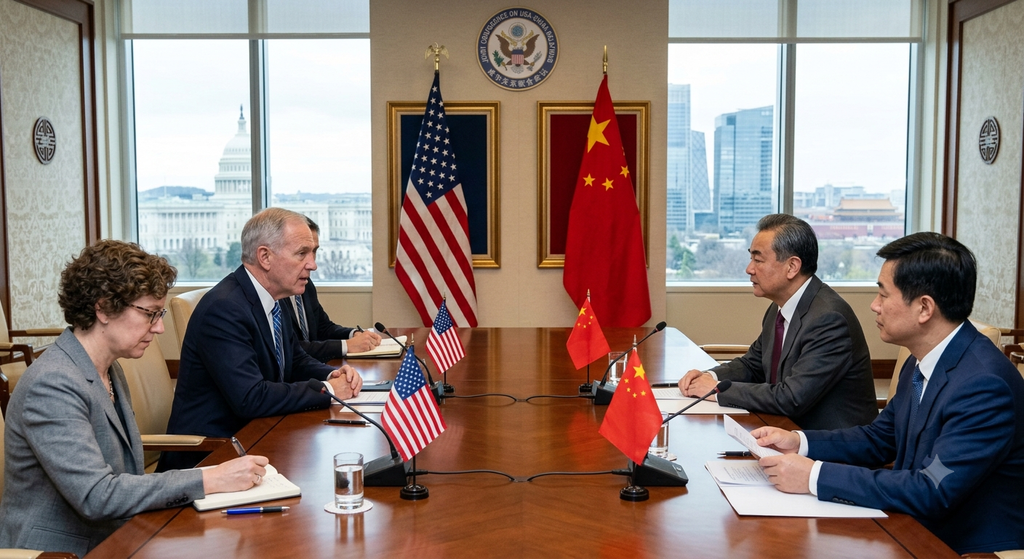
The relationship between the United States and China remains one of the most important forces shaping world politics and the global economy. The two countries are deeply connected through trade, technology, finance and supply chains, yet they also compete over strategic influence, advanced technology and regional security.
As of September 2026, Washington and Beijing are attempting to manage these differences through high-level diplomacy while competition continues in several critical areas. Chinese President Xi Jinping is scheduled to visit the United States from September 23–25, where discussions with President Donald Trump are expected to cover trade, artificial intelligence and broader geopolitical issues.
Trade: Competition With Economic Interdependence
Trade has been one of the biggest sources of tension between the two countries. Washington has sought to reduce economic vulnerabilities and address concerns about Chinese trade practices, while Beijing wants continued access to major international markets.
Despite political tensions, the two economies remain connected. Supply chains involving electronics, machinery, consumer products, energy-related technologies and other goods link American and Chinese businesses.
The current trade relationship also includes negotiations over a trade truce established in 2025. According to recent reporting, that arrangement is scheduled to expire on November 10, 2026, making the upcoming diplomatic discussions particularly significant for businesses and investors.
The AI and Technology Battle
Technology has arguably become the central arena of U.S.–China competition.
Both countries are investing heavily in artificial intelligence, semiconductors, advanced computing and other strategic technologies. The United States has imposed restrictions affecting China’s access to certain advanced technologies, while China has accelerated efforts to strengthen its domestic technological capabilities.
The competition has now expanded beyond chips. In September 2026, U.S. officials accused several Chinese AI companies of improperly copying American AI technology. Chinese authorities rejected the allegations and argued that the AI technique involved is widely used.
At the same time, Washington and Beijing are discussing AI safety. Recent talks produced plans for another meeting in Shenzhen and discussions about creating an emergency communication mechanism for serious AI-related incidents.
This combination of competition and cooperation illustrates the complexity of the relationship: the countries can compete intensely while still recognizing the need to communicate on technologies that could affect the entire world.
Taiwan and Regional Security
Taiwan remains one of the most sensitive issues in U.S.–China relations.
The United States maintains an unofficial relationship with Taiwan while following its longstanding “one China” policy. Washington has also emphasized the importance of peace and stability across the Taiwan Strait. (State Department)
China considers Taiwan part of China and strongly opposes moves toward Taiwanese independence or increased foreign military involvement. Because of these different positions, developments around Taiwan can quickly become a major source of tension.
The issue also matters economically because Taiwan plays a major role in global semiconductor supply chains. (State Department)
Rare Earths and Critical Minerals
Another important area is rare earth minerals. These materials are essential for many modern technologies and defense applications.
Recent reporting indicates that China has significant control over global rare-earth mining and refining, giving Beijing an important position in negotiations with Washington. The issue has become especially relevant ahead of the Trump–Xi summit.
This demonstrates why modern geopolitical competition is no longer only about armies and territory. Minerals, chips, data centers, AI models and supply chains have also become strategic assets.
What Comes Next?
The future of U.S.–China relations is likely to involve both competition and cooperation. The countries have major disagreements over trade, technology and regional security, but they also have strong economic connections and shared interests in preventing uncontrolled escalation.
The upcoming Trump–Xi meeting could provide an opportunity to manage these disagreements, particularly around trade and technology. However, individual agreements will not eliminate the deeper strategic differences between Washington and Beijing.
Ultimately, U.S.–China relations will remain a defining relationship of the 21st century. What happens between these two powers can influence global markets, technology, supply chains, international security and the future of artificial intelligence. For businesses, governments and ordinary consumers around the world, the relationship between Washington and Beijing is therefore much more than a bilateral issue—it is a major factor in the direction of the global economy and international order.
Leave a Reply